JUSTICE · UPRIGHT POSITION
- Fairness
- Truth
- Law
- Duty
- Balance
- Objectivity
JUSTICE · REVERSED POSITION
- Unfairness
- Dishonesty
- Imbalance
- Avoidance
- Guilt
- Bias
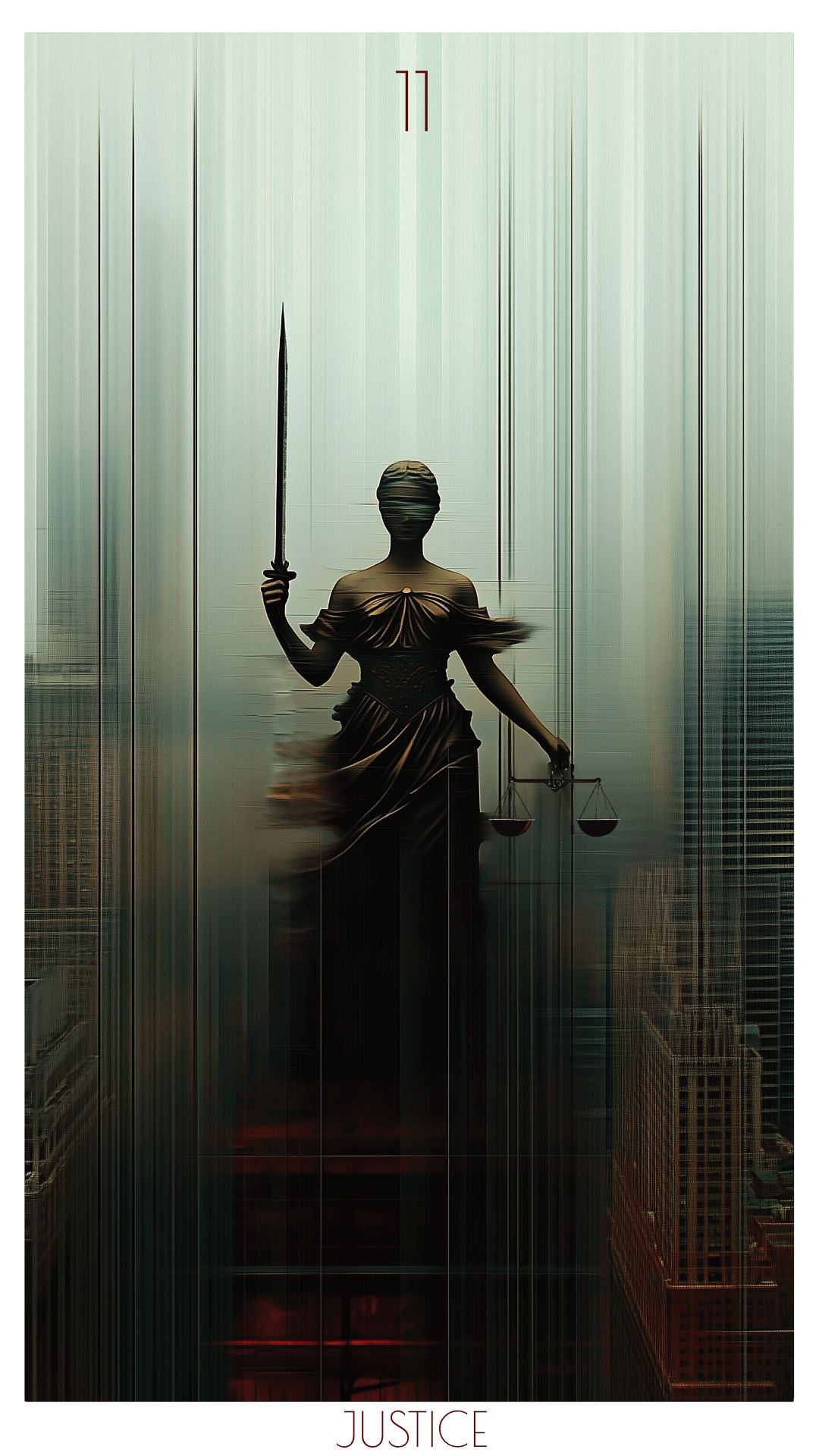
Justice asks you to act with integrity, weigh options objectively, and hold yourself accountable. This card brings clarity and resolution. Now is a time to address unfinished business, resolve disputes, or make decisions that reflect your values. Trust that fairness and honesty will serve you best. Justice encourages you to take responsibility and trust the process, even if results take time.
This card asks you to consider the consequences of a choice from more than one side. Your position matters alongside agreements and facts that may be uncomfortable to acknowledge. Check the terms, reconstruct what happened, and name your share of responsibility. Fairness has a harder job when your inner defence lawyer is also taking all the minutes.
If others are involved, let them give their account. You need not agree, but hearing the context can help you understand responsibility more accurately. Check whether you apply the same measure to yourself and others. Circumstances deserve explanation without always erasing consequences. An honest decision includes context and a concrete answer to what should happen next.
Separate what you know from assumptions and other people’s interpretations. Which decision could you explain honestly to everyone involved?
The Reversed Justice warns that imbalance, dishonesty, or avoidance are affecting your current situation. Acknowledge mistakes, make amends, and be as transparent as possible. Now is a time to face consequences, even if it’s uncomfortable. Restore balance by accepting your role and taking corrective action. Skipping accountability only prolongs the problem.
This card asks you to consider the consequences of a choice from more than one side. Your position matters alongside agreements and facts that may be uncomfortable to acknowledge. If the picture seems obvious, check for a missing detail. You can acknowledge a mistake without humiliating yourself and identify someone else’s responsibility without appointing yourself their judge.
If others are involved, let them give their account. You need not agree, but hearing the context can help you understand responsibility more accurately. Check whether you apply the same measure to yourself and others. Circumstances deserve explanation without always erasing consequences. An honest decision includes context and a concrete answer to what should happen next.
Under strain, check a message’s meaning and the grounds for a conclusion. Which fact complicates your preferred account of events?