THE HANGED MAN · UPRIGHT POSITION
- Pause
- Surrender
- Perspective
- Sacrifice
- Patience
- Insight
THE HANGED MAN · REVERSED POSITION
- Stagnation
- Resistance
- Delay
- Doubt
- Martyrdom
- Frustration
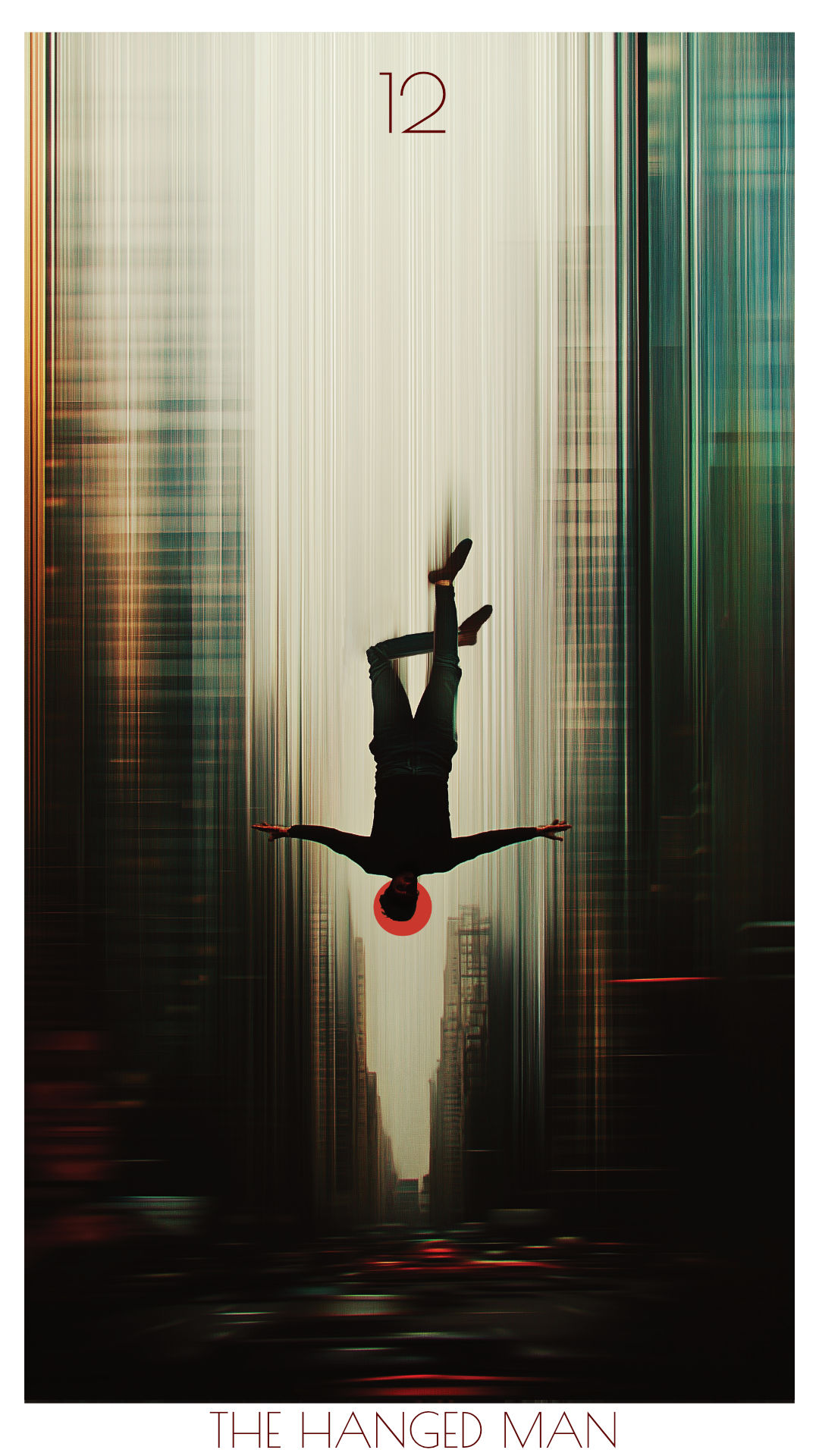
The Hanged Man asks you to let go of immediate outcomes and pause for reflection. Sometimes the best progress is made by surrendering control and seeing things differently. This card signals a need for patience, waiting, or a shift in viewpoint. Sacrifice in the short term will bring clarity and growth. Use this time to reconsider your priorities and allow answers to emerge naturally.
Sometimes the familiar solution has run out of usefulness, and more effort only fixes you more firmly in place. A different angle may help: stop trying to extract the same answer for a while. Ask what becomes visible when you change the starting assumption. A pause can contain something valuable without putting on a business suit and pretending to be productivity.
Revisiting the original question may matter more than finding another answer. Ask whether you still want that result or continue waiting mainly through habit. A pause helps when understanding changes within it. Notice new information or a different view of a familiar problem. If nothing changes, clarify the terms of waiting and when you will return to the decision.
Separate what you know from assumptions and other people’s interpretations. What becomes visible from a different perspective?
The Reversed Hanged Man warns that you may be stuck, resisting change, or unable to see alternatives. Indecision or fear of letting go is causing stagnation. This is a time to reassess your position, release outdated thinking, and be willing to try a new approach. Insight and progress will come when you allow yourself to see things differently.
Sometimes the familiar solution has run out of usefulness, and more effort only fixes you more firmly in place. A different angle may help: stop trying to extract the same answer for a while. Waiting needs a purpose and a point for review. If you keep sacrificing your interests for an undefined later, name the condition under which you will begin to act differently.
Revisiting the original question may matter more than finding another answer. Ask whether you still want that result or continue waiting mainly through habit. A pause helps when understanding changes within it. Notice new information or a different view of a familiar problem. If nothing changes, clarify the terms of waiting and when you will return to the decision.
Under strain, check a message’s meaning and the grounds for a conclusion. Discuss one concrete issue and set broad judgements aside. What are you still waiting for when the conditions have not changed?